
High School Students With Personal Finance Education Exhibit Strong Money Knowledge and Habits
Personal experience can be a thorough teacher, especially on the topic of money. Unfortunately, the lessons learned can be costly—just ask anyone who’s signed up for a car loan payment that equaled a quarter of their income, has neglected to get the proper insurance coverage, or is facing a retirement savings shortfall.
When those personal finance lessons are taught in high school classrooms, however, students build a solid knowledge base about how money works, establish good financial habits early on, and enter adulthood with confidence about how to manage their money.
High Marks in Overall Money Knowledge
Ramsey Solutions surveyed more than 76,000 high school students across the nation for its Students and Money National Research Study. This report, the first of a five-part series based on the survey results, focuses on the financial knowledge and money habits of students who take personal finance education courses as part of their high school education.
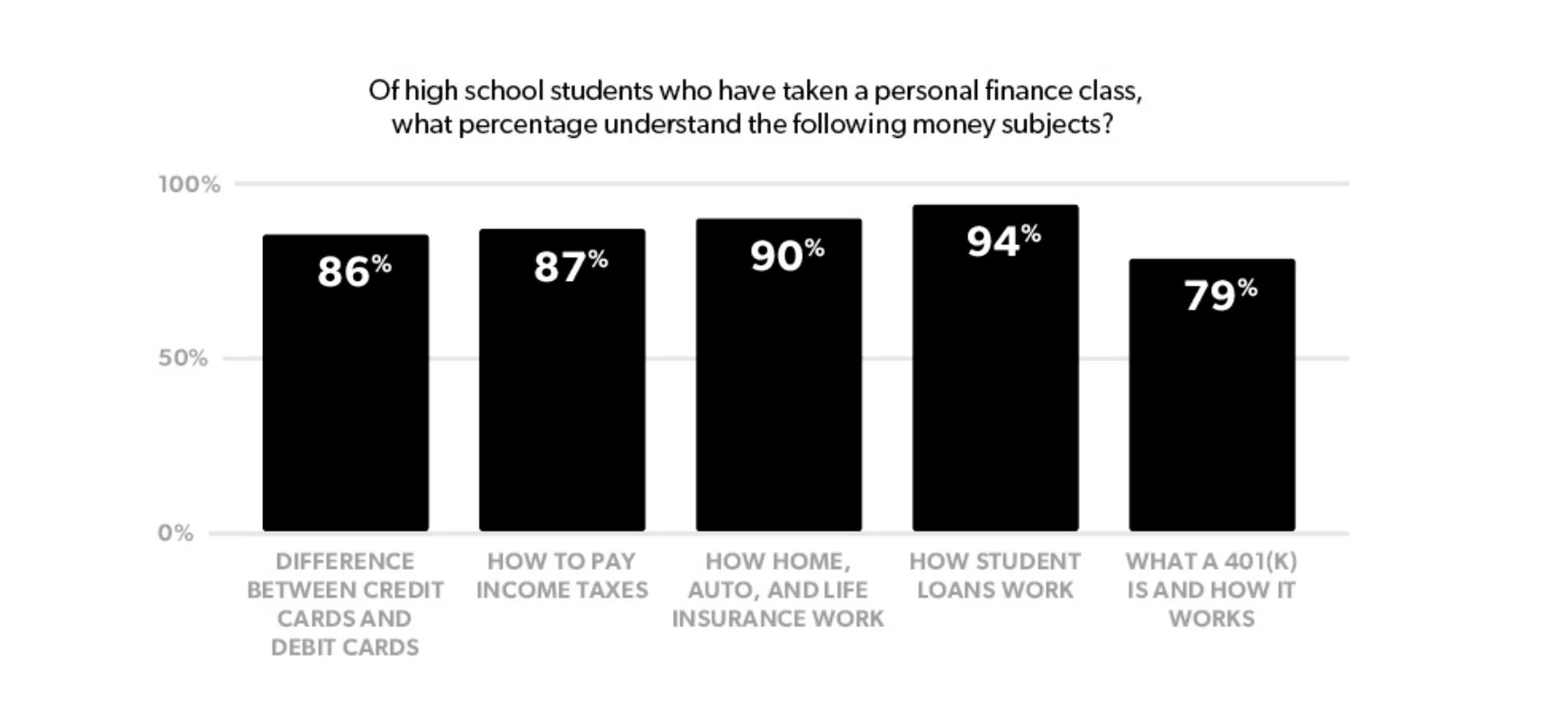
The survey measured students’ understanding of several financial topics ranging from the basic, such as the difference between a debit and credit card, to more complex concepts, like income taxes, insurance, student loans and 401(k)s.
Not only did students who had taken a personal finance course score higher in every topic than students who had not taken such a course, but they also scored extremely high in each category. For example:
86% of students reported a complete understanding of the difference between a debit card and credit card.
87% said they understand how to pay income taxes.
90% said they understand how home, auto and life insurance work.
Increased Understanding of Student Loans
High school-level personal finance courses also prepare students well on the topic of student loans, with 94% of those students saying they understand how student loans work. On the other hand, students who had not completed such a class were twice as likely as those who had to say they do not understand how student loans work.
Students who had completed a personal finance course were 23% less likely to say they plan to use student loans to pay for college than students who had not taken a personal finance course. Their top college funding sources include scholarships (69%), help from their parents (53%), and personal funding/myself (51%), instead.
Students Face Retirement Planning With Confidence and Know-How
When it comes to saving for retirement, students who have taken a personal finance course will enter the workforce with an advantage. Nearly 80% said they understand what a 401(k) is and how it works, compared to just 63% of students who have not taken such a course.
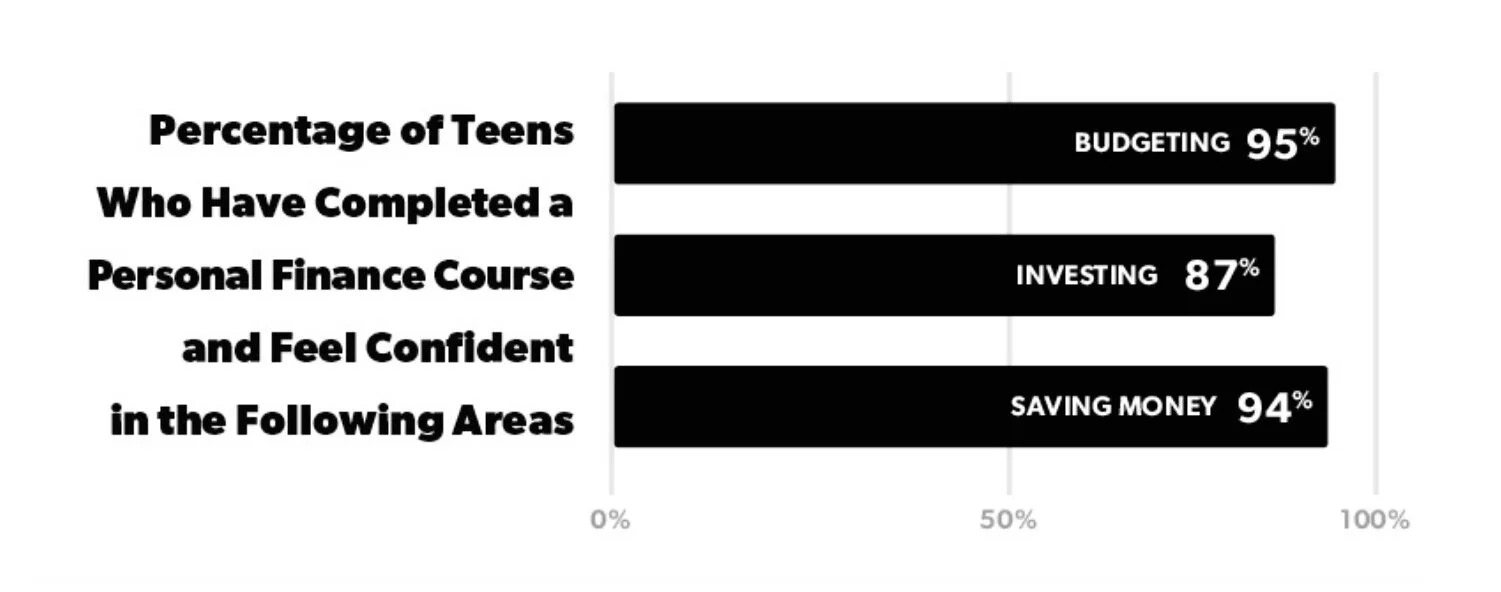
In addition to imparting financial knowledge, personal finance classes equip students with the confidence they need to put that know-how into practice. Nearly all students who have completed a personal finance course report high confidence levels in several money skills: 95% of students are confident about budgeting, 87% about investing, and 94% about saving money.
Education Impacts Behavior
Lessons learned in the classroom have already translated into real-life action. According to the survey, nearly 80% of personal finance students have their own bank accounts.
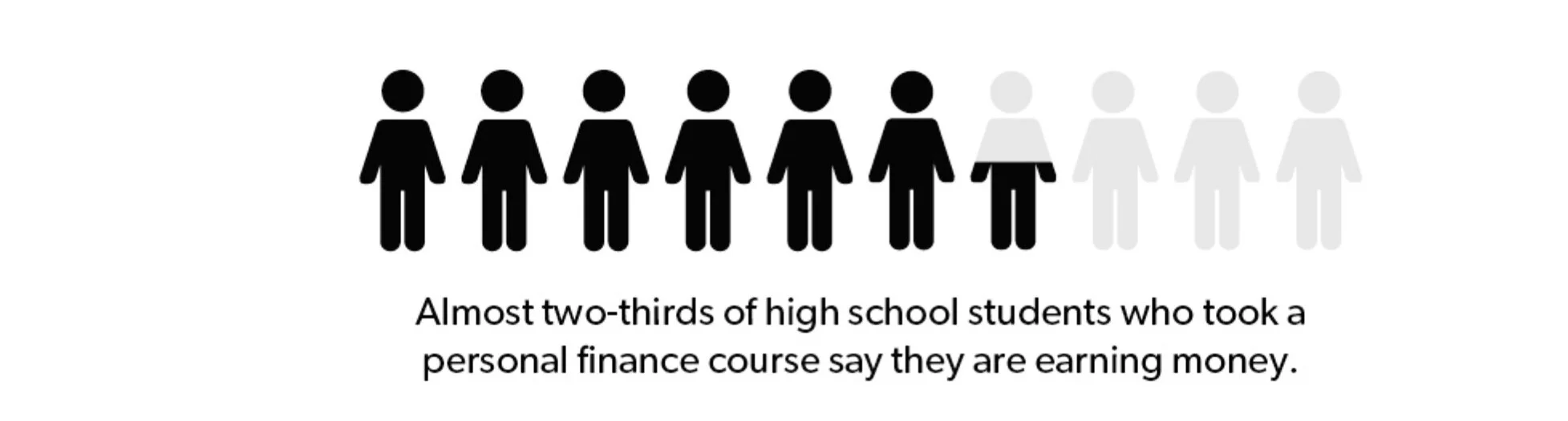
And those accounts aren’t gathering dust, waiting for the next infusion of birthday cash, either. Almost two-thirds of students who took a personal finance course say they are earning money, bringing in an average monthly income of $243, totaling $3,000 per year.
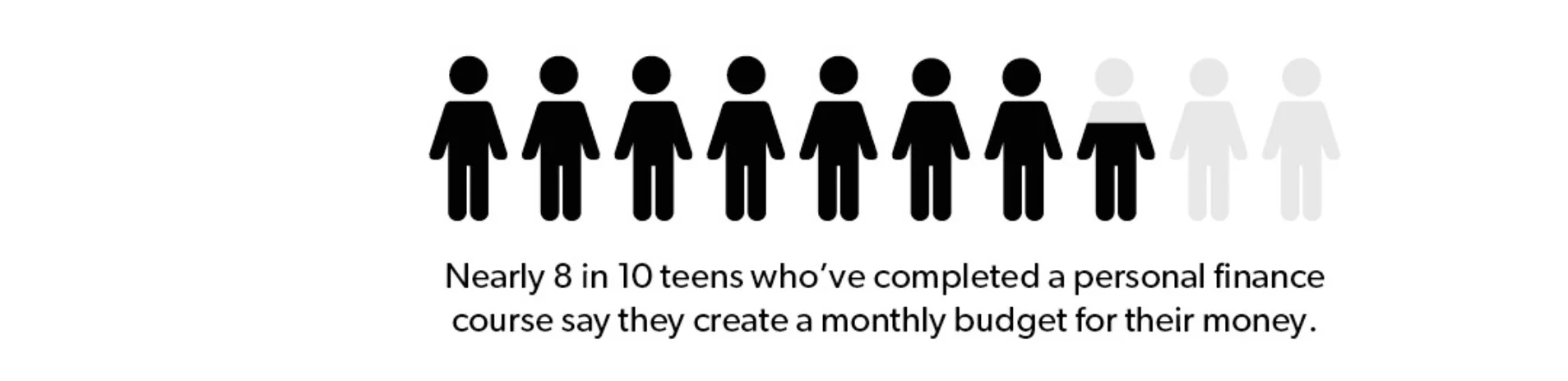
Not only that, nearly 8 in 10 students who’ve completed a personal finance course say they create a monthly budget for their money, and 20% say they have a car they paid for by themselves.
Financial Priorities Are Clear
Students with a personal finance education also show a solid ability to prioritize financial choices based on necessity and security rather than luxury.
For example, students who have completed a personal finance course were more than three times as likely to say they’d rather have $500 in the bank instead of a smartphone.
If you make the wrong choice in class, you get a bad quiz grade. If you make the wrong choice in real life, you could end up paying for it for years!
- Anthony ONeal
Students lacking a personal finance education were 25% more likely to rank television/cable as a necessity. Students who have taken a personal finance course were more likely to rank insurance (96%), utilities (94%), mortgage/rent (83%) and a college education (83%) as their must-haves.
Few Students Receive the Benefits of Personal Finance Education
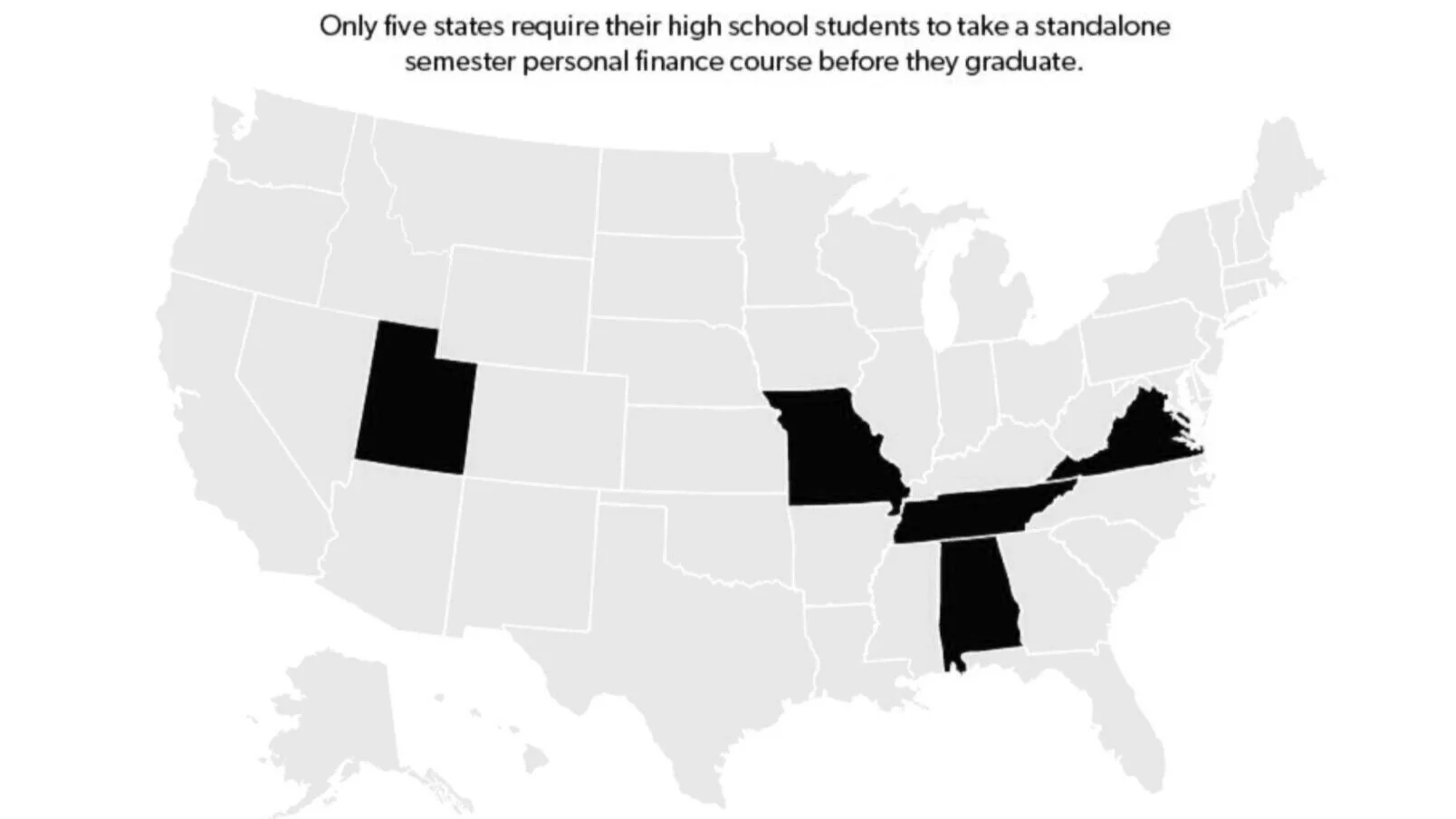
Despite the benefits of personal finance education in high schools, only five states require their students to take a standalone semester personal finance course before they graduate, according to the Council for Economic Education.
FINANCIAL LITERACY MUST BE TAUGHT IF WE WANT OUT KIDS TO HAVE A FIGHTING CHANCE!